Prayers for the Stolen What Art Form Do the Women Pracctice in Prison
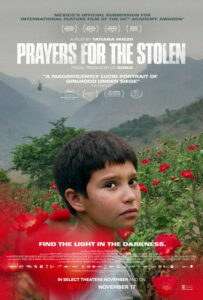
Prayers for the Stolen (Tatiana Huezo, 2021) 4 out of 4 stars.
Out of tragic circumstances can come beautiful art, and Tatiana Huezo's Prayers for the Stolen ("Noche de fuego" in Spanish) shows the states how information technology's done. Adjusted from Jennifer Clement's eponymous 2014 novel, the film marks the director's commencement fiction feature, though she has previously made feature documentaries such every bit the 2016 Tempestad . Filmed in the town of Neblinas, located 360 kilometers to the northward of Mexico Urban center, perched atop gorgeous mountains, Prayers for the Stolen follows the lives of the region'south residents—specially the women—every bit they navigate the dangers of both military and cartel operations. Given the frequent collusion between the two groups, there's nowhere to run when things plow dangerous, which is near of the time. Despite the oppressive temper, Huezo fills her frame with stunningly cute images, the better to dissimilarity with the ugliness not and so far beneath the surface. It's a stunning narrative debut.
The story begins with 9-year-sometime protagonist Ana (Ana Cristina Ordóñez González) climbing into a hole just dug past her and her mother, Rita (Mayra Batalla, Cindy La Regia ). Information technology's just the right size for Ana, looking uncomfortably like a shallow grave; the full import of this pit will exist revealed soon enough. So, Huezo takes the time to establish the identify, using Terrence-Malickian shots of woods nature and insects to showcase the lush beast and flora in which Ana lives. That's not all that thrives there, all the same, for the expanse is as well home to poppy fields, source of steady income for the locals despite the frequent helicopter-dropped poison from the army. And occasionally, the cartel will swing by to grab a young adult female just as she matures, for reasons all to depressingly obvious. Hence that hole, now covered with a makeshift camouflage superlative. Should they ever come for Ana, Rita will be ready.

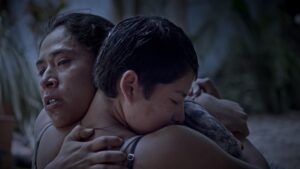
These details only slowly come out, as we initially spend time with Ana and her two best friends, Paula and María (the latter of whom has a cleft palate). Rita avoids working in the poppy fields, but not and so María's mom. Anybody believes that doing so provides some course of protection from the cartel. Plus, María's brother works in the local quarry, also controlled by the cartel; that should help, too. Simply Rita and Paula'south mother make up one's mind that their girls will better be protected past cutting their hair, thereby keeping them equally masculine looking as possible. Meanwhile, the afoot schoolteacher is outraged when he discovers what can happen to the region'due south women, and threatens to exit, simply the reaction of the parents is not what he hopes it volition be. In a locale with so few opportunities, who dares upset long-held customs? The desperation of anybody is brought home nightly as they climb the hills for amend reception to telephone call relatives working away, as does Rita, whose married man, abroad in America, barely responds. Without options, people make terrible compromises.
All comes to a head shortly afterwards the midpoint, when in a masterful transition, Huezo fast-forrard five years to Ana and her friends' adolescence. Or rather, the cusp of it, as womanhood beckons just around the corner. This older Ana (Marya Membreño) is bolder and more assertive, but without a house grasp of the risks she courts. Spending time with a boy (María's now-hottie of a brother), she also moons after a new teacher, this one every bit charming as he is insistent that his students accept charge of their lives. But events have a way of overtaking resolve. Before the big, upsetting climax, we sentry as María has her palate repaired via surgery, Paula gets burned by one of the constant poison clouds, and Ana starts menstruating, each a foreshadowing of major change—or disaster—fast approaching. Information technology all combines in a brilliant commentary on the abuse of ability that is non only a meditation on Mexico today, merely on all societies that treat women as commodities. Those that are stolen may never return, but their memories burn down brightly, hopefully leading the way to reform. At to the lowest degree nosotros can dream.
Source: https://filmfestivaltoday.com/film-reviews/film-review-breathtaking-prayers-for-the-stolen-laments-lost-innocence
0 Response to "Prayers for the Stolen What Art Form Do the Women Pracctice in Prison"
Post a Comment